.jpg)
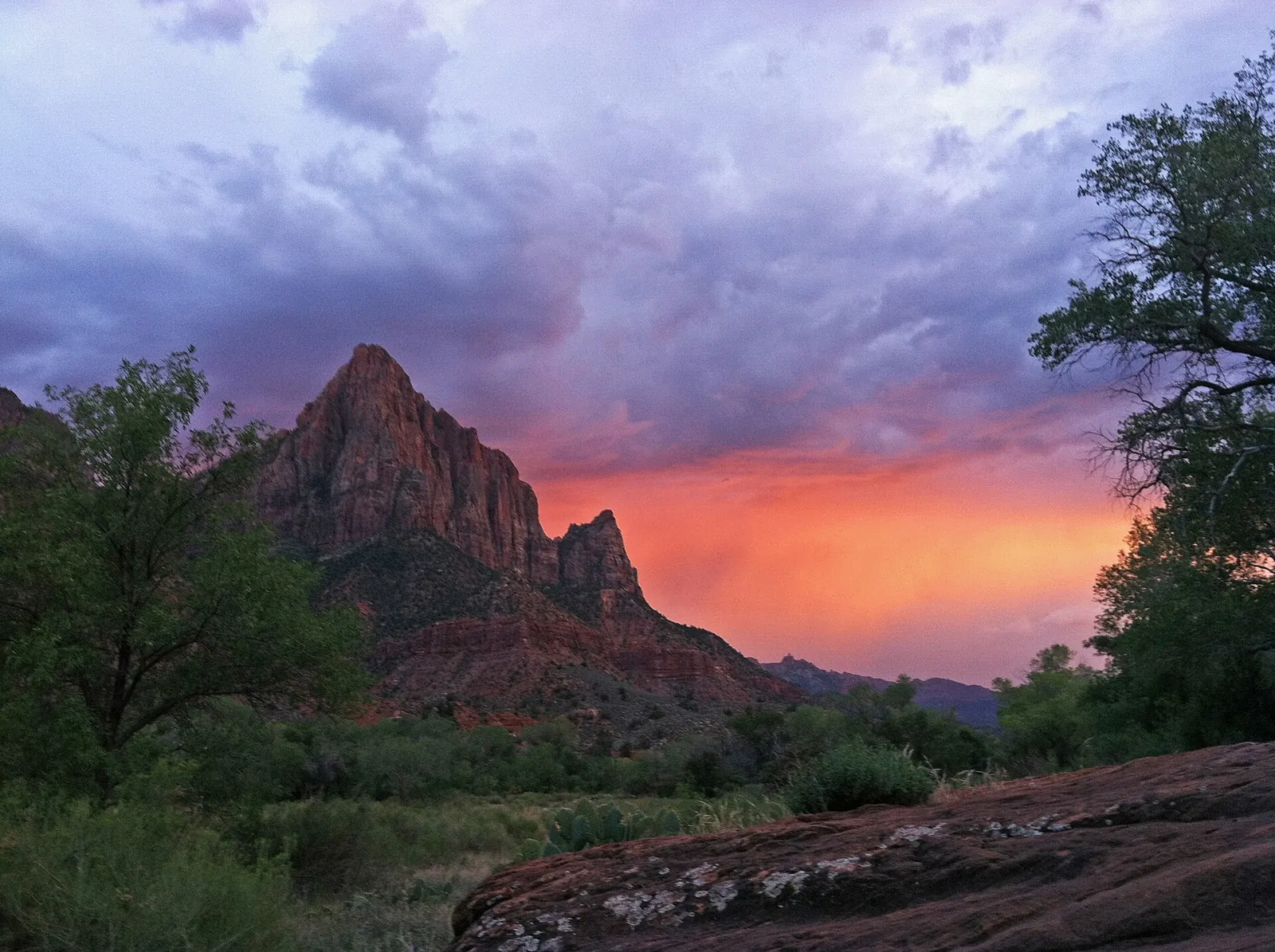
Sunrise
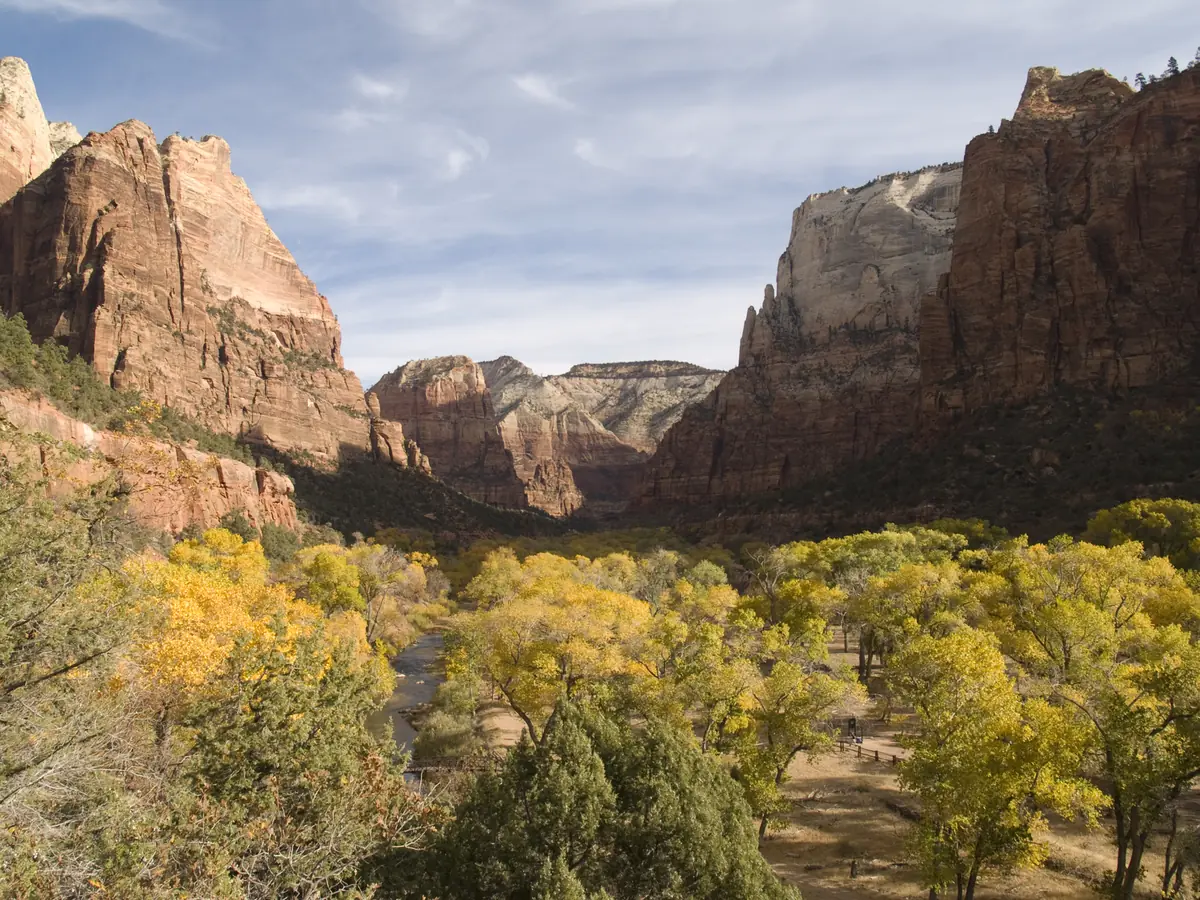
Zion Canyon’s cliffs block much of the horizon, so you are usually photographing light on the walls, not the sun itself. NPS lists:
- Human History Museum patio (ADA accessible) — morning light on the Temples and Towers.
- Canyon Overlook Trail — moderate, 1 mile round trip on the east side. Parking is extremely limited.
- Lava Point Overlook — on Kolob Terrace Road; closes seasonally when snow falls.

Sunset
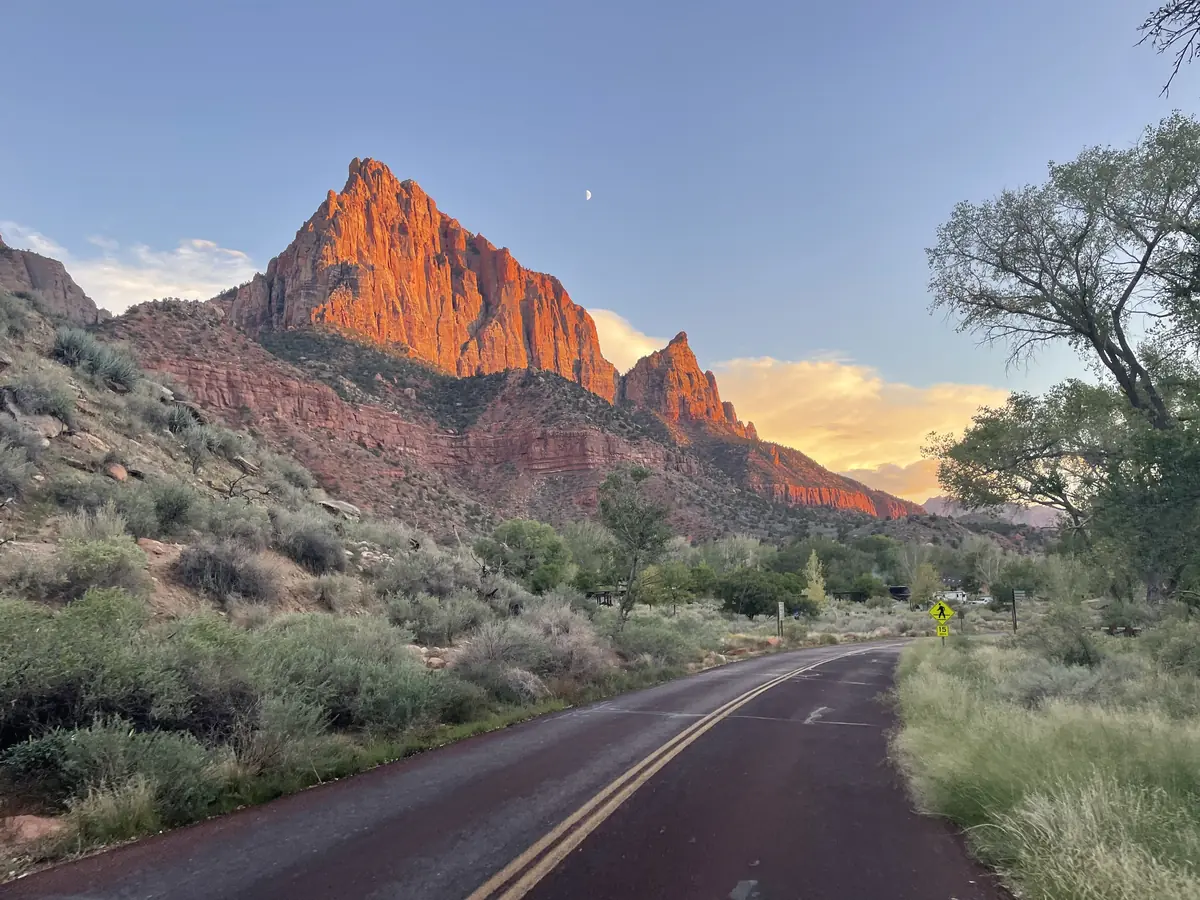
- Pa’rus Trail — paved, 3.5 miles round trip; golden light on the Watchman. NPS suggests a pedestrian bridge on the Pa’rus Trail for that shot.
- Timber Creek Overlook parking lot (ADA accessible) — end of Kolob Canyons Scenic Drive.
- Lava Point Overlook.
Don’t stop in roads or stand on the Canyon Junction Bridge to photograph. NPS points you to the Pa’rus Trail for the same view.
Some links on this page earn us a commission at no extra cost to you.
NPS says the best light is generally the hour after sunrise and the hour before sunset. Bring a headlamp and check the time of the last shuttle if you shoot sunset on the Scenic Drive.
.jpg)
Night photography
The park is open 24 hours. Full dark starts about 1.5 hours after sunset; the Milky Way shows best in August and September, in the week before a New Moon. Use red light only around other stargazers. Details are on our stargazing page.
.jpg)
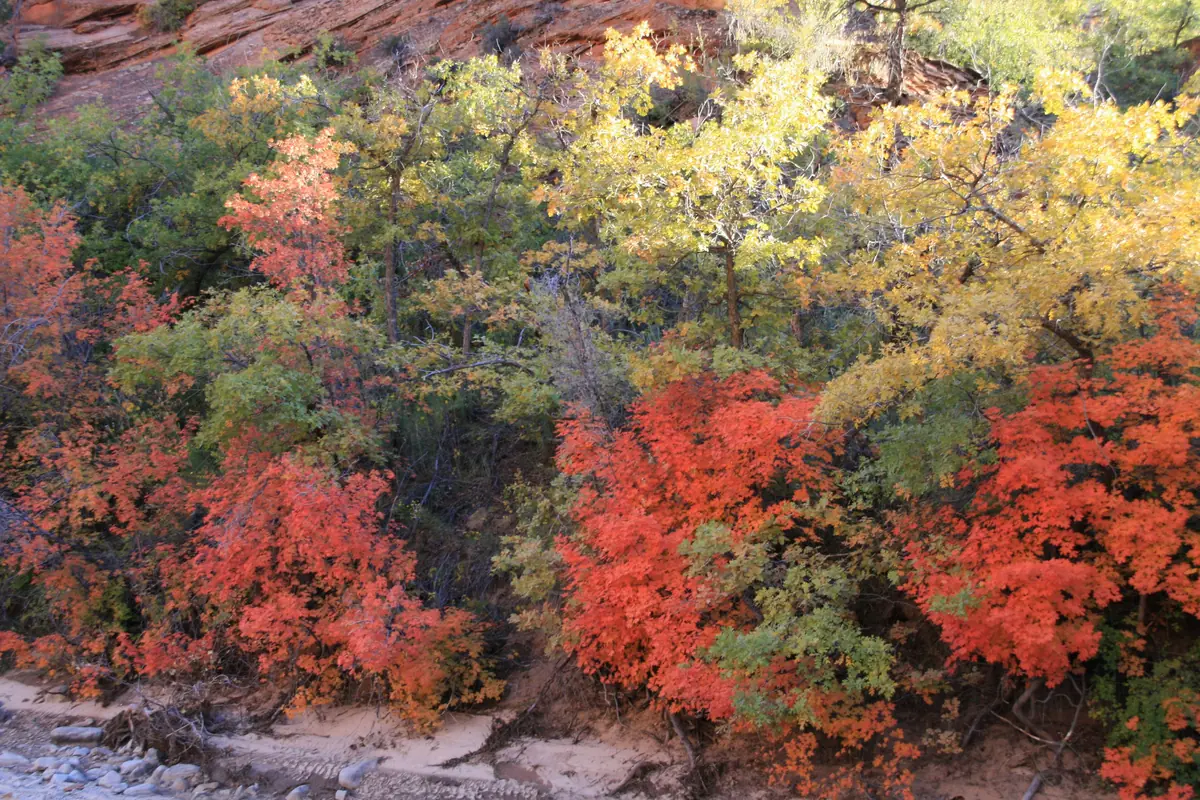
Permit rules (EXPLORE Act, from NPS)
- In most cases, no permit or fee is needed for filming or still photography with eight or fewer people, if it is in areas open to the public, uses hand-carried equipment only, needs no exclusive use of a site, doesn’t harm resources or other visitors, and isn’t likely to add NPS costs.
- Commercial, non-commercial, content-creator, student, and media shoots are treated the same.
- More than eight people (maximum 12) needs a special use permit: a $150 non-refundable application fee and at least three weeks (21 days) lead time, plus location and other fees.
- For permitted shoots, NPS lists places it does not permit: designated Wilderness and Recommended Wilderness (including most slot canyons), the West Rim Trail including Scout Lookout and Angels Landing, and, currently, Riverside Walk and the Narrows.
- Drones are prohibited in Zion National Park.
- Entrance fees still apply to photographers.
Stay on official trails for every frame. See our nature page for why.
Quick FAQ
Do I need a permit to take photos in Zion?
In most cases, no, if your group is eight or fewer and meets the NPS conditions (public areas, hand-carried gear, no exclusive use, no harm). Larger groups up to 12 need a permit.
Can I fly a drone in Zion?
No. NPS says remote-controlled aircraft, including drones, are prohibited in the park.
Where can I photograph the Watchman at sunset?
From the Pa’rus Trail. NPS says not to stop in roads or stand on the Canyon Junction Bridge.