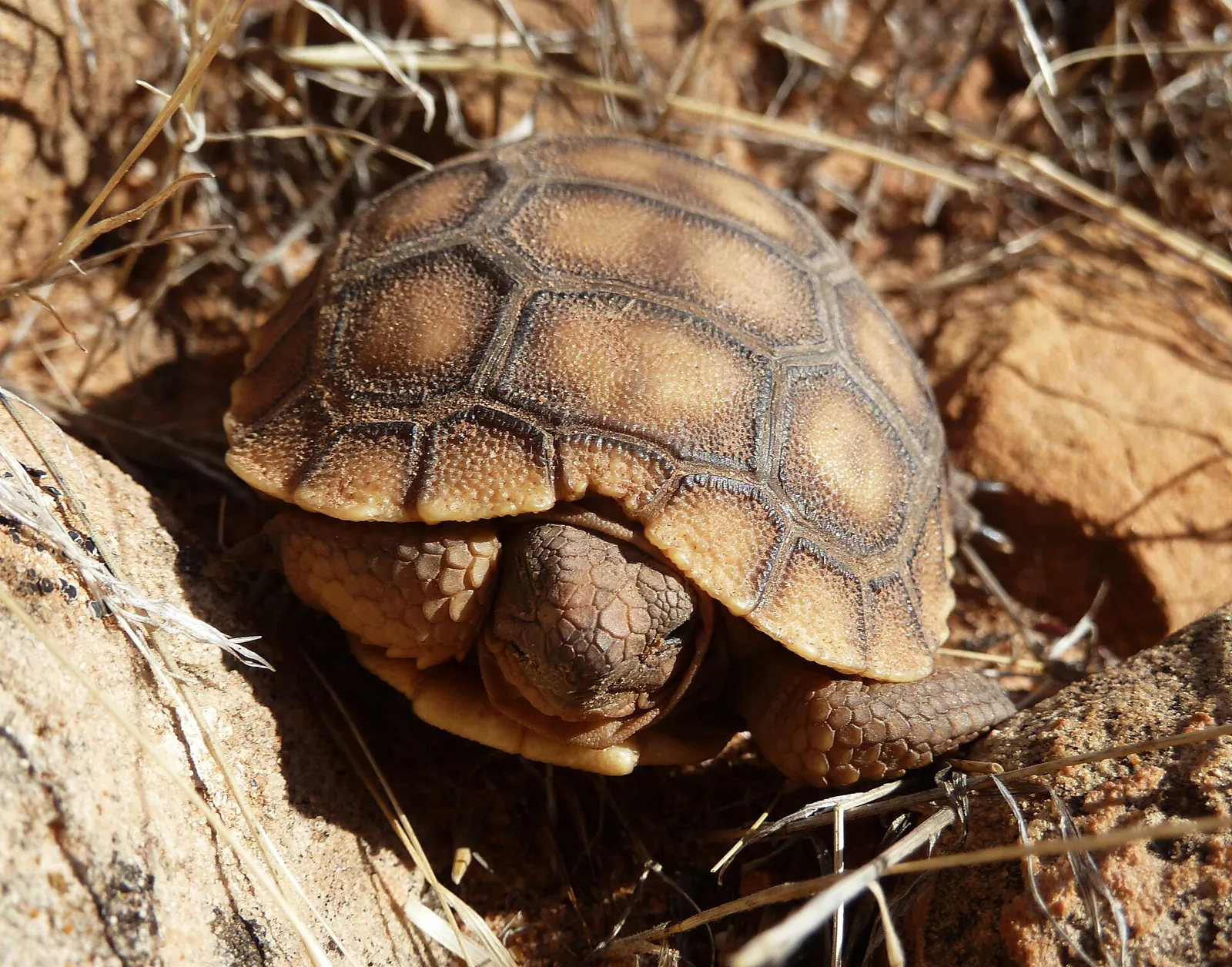

Desert tortoise
- A rare sighting. The low desert of Zion is at the northeastern extreme of the desert tortoise’s range.
- Tortoises spend nearly 95% of their lives in burrows and come out mostly in spring and fall.
- Listed as federally threatened in 1990. The species in Zion and Springdale is the Agassiz’s (Mojave) desert tortoise.
- Juveniles grow only about 2.5 cm a year and have soft shells; NPS puts juvenile mortality near 99%.
- When threatened, a tortoise may release its bladder and lose its stored water.
NPS asks you not to pick tortoises up unless one is in danger on the roadway, and to watch from a distance. If your car is parked in the low desert, look underneath before driving. Tortoises sometimes rest in a vehicle’s shade.
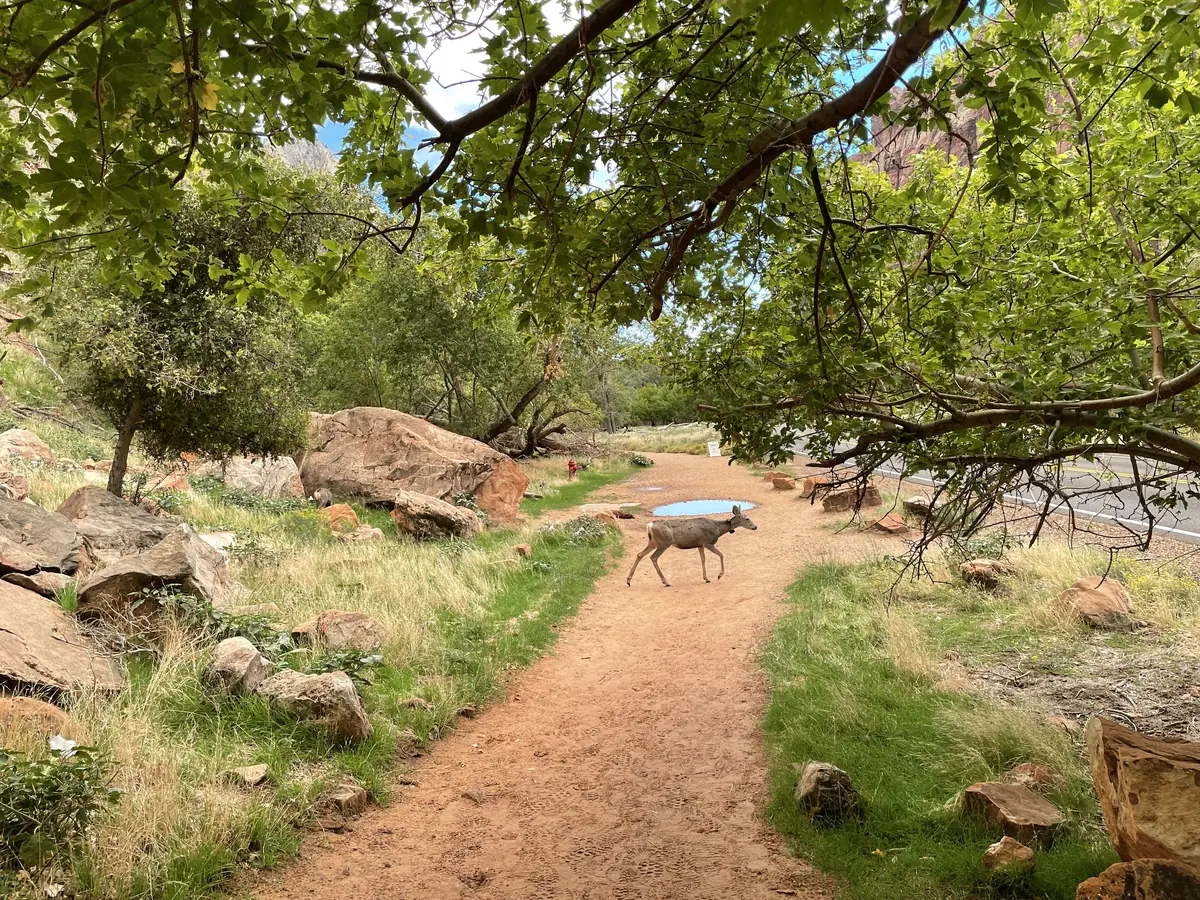

Biological soil crust
NPS describes biological soil crust as a community of micro-organisms that helps keep sand in place and provides nutrients and moisture so plants can grow. Thick crust looks like lumpy black areas, much like fungus. When you walk on it, the organisms die. The park’s shorthand: don’t bust the crust, even if a shortcut looks shorter.
.jpg)
Where to stay on trail
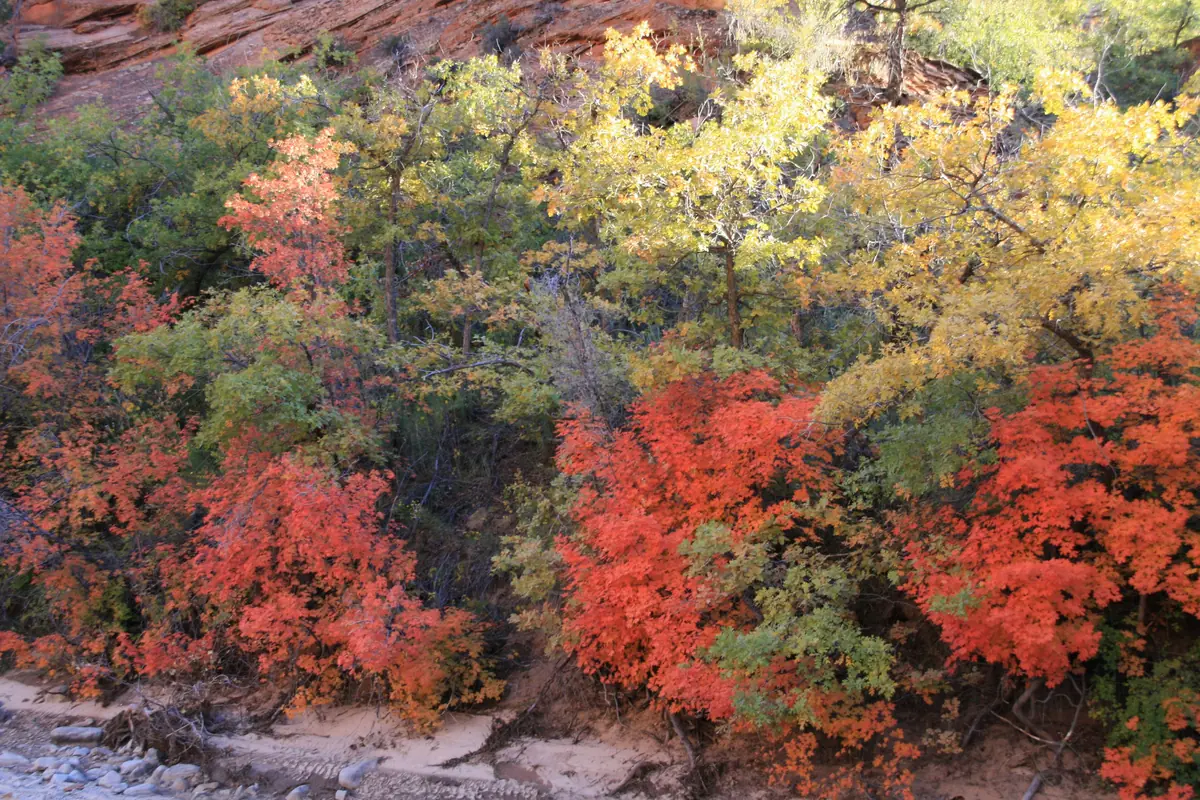
- Stay on official park trails. NPS says going off trail for a new angle harms vegetation and wildlife.
- At night, stay on trails and in parking areas.
- Do not walk on vegetation near the Human History Museum.
- Emerald Pools are fragile and a water source for wildlife. Do not go into the water.
- Pets are allowed only on the Pa’rus Trail, on a leash no longer than 6 feet. Keep dogs out of the river.
- Never feed wildlife, keep a safe distance, and only look or take pictures.
Related: Junior Ranger, photography rules, dogs.
Quick FAQ
Are there desert tortoises in Zion?
Yes, but sightings are rare. NPS says Zion’s low desert is at the northeastern extreme of their range, and they are most active in spring and fall.
What should I do if I see a tortoise?
Watch from a distance. NPS says not to pick one up unless it is in danger on the roadway.
What does “don’t bust the crust” mean?
Biological soil crust is alive. Walking on it kills the organisms, so stay on trails and don’t create shortcuts.