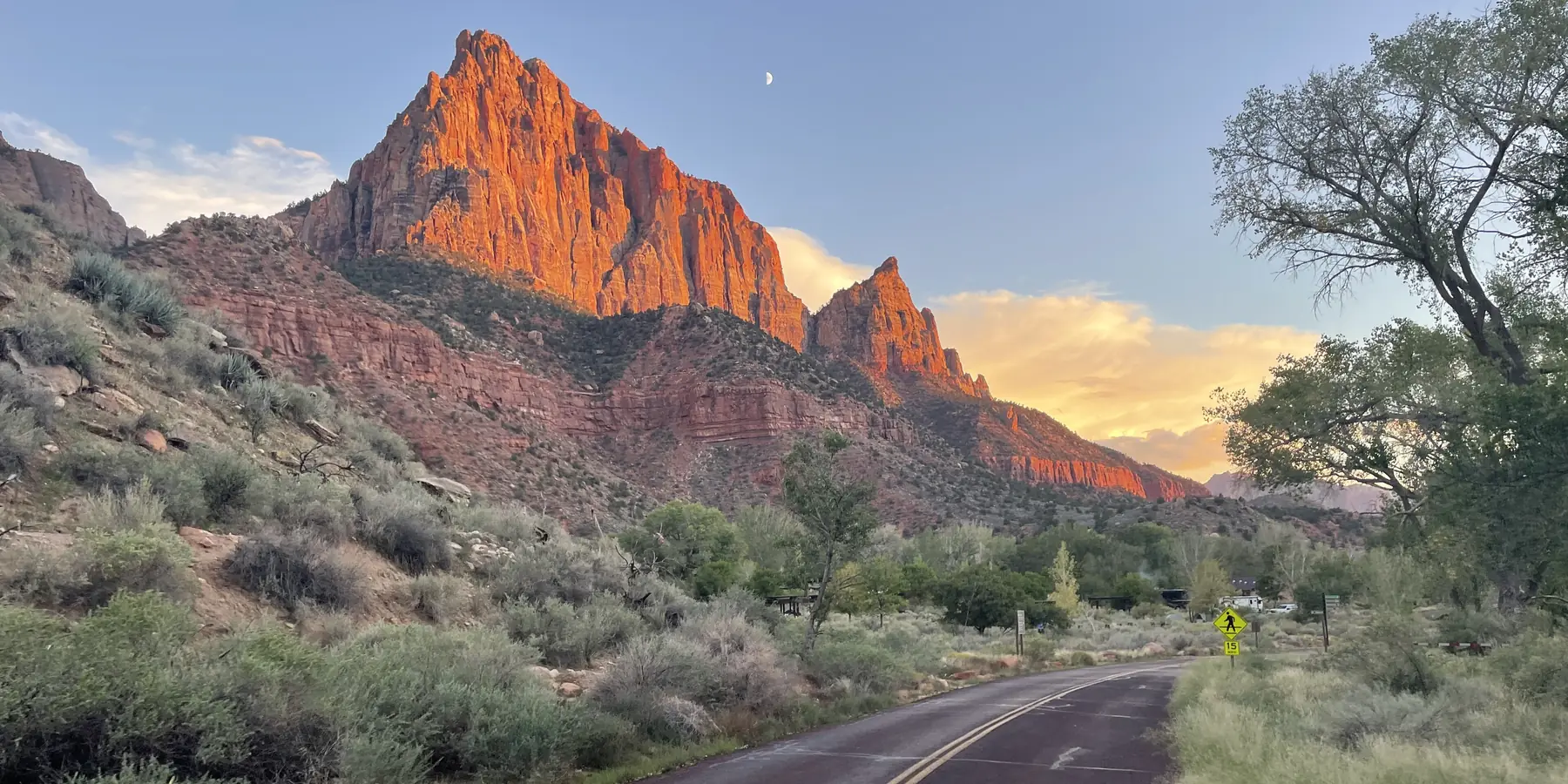

You do not need a ticket to ride the shuttle. You do need an entrance pass to enter the park. During shuttle season, private cars are not allowed on Zion Canyon Scenic Drive, including before the first bus and after the last one. The schedule is on the shuttle page, and it says the table can change. If you only have a morning, use by time. That page has even shorter options.
Half day (about 4 hours)
- Park early (in summer, NPS says parking inside the park is often full by 9:00 a.m.) or use the Springdale shuttle.
- Ride the shuttle to the Temple of Sinawava (stop 9) for the Riverside Walk: mostly paved, about an hour, per the NPS shuttle narration.
- On the way back, get off at Zion Lodge for the Lower Emerald Pools Trail (about one mile round trip to the small waterfall, per NPS).
- End on the Pa’rus Trail from the visitor center. No shuttle needed.
Carry: the Day Hike kit. See where the stops are on maps.

The bus pattern, not a clock we invented
The shuttle page, updated October 1, 2026, prints first and last times by date block. For September 13 to October 24, the first Zion Canyon bus leaves the visitor center at 7:00 a.m., and the last bus leaves the Temple of Sinawava at 7:15 p.m. The next block, October 25 to November 28, starts at the same 7:00 a.m. and ends earlier. November 29 to December 25 is listed as no service. Read the row for your dates. Do not trust this paragraph after the park changes the table.
In that same September 13 to October 24 block, the first Springdale bus leaves the Hotel De Novo at 8:00 a.m. That is later than the first canyon bus. If you park in town, you may miss the earliest canyon departures. NPS says not to wait for the last bus. If it is full or you miss it, the schedule note says you may have to walk nine miles back to the visitor center. The FAQ on the same page says up to eight miles or more. Plan to be done with a cushion either way. A ride from the visitor center to the Temple of Sinawava is about 45 minutes. A round trip in the canyon is about an hour and a half before any hiking.
One day
Start early. In summer the seasons page says parking inside the park is often full by 9:00 a.m. If you will be later than that, plan on Springdale and the town shuttle. Ride to one hike, not three. A clean one-to-three-hour walk is the Riverside Walk from the Temple of Sinawava, shuttle stop 9. The trail-access page lists it at about 1 mile one way. The shuttle narration calls it about two miles round trip, about an hour, easy, and mostly paved. Those are both NPS. If you need a single number, check the trail page the week you go.
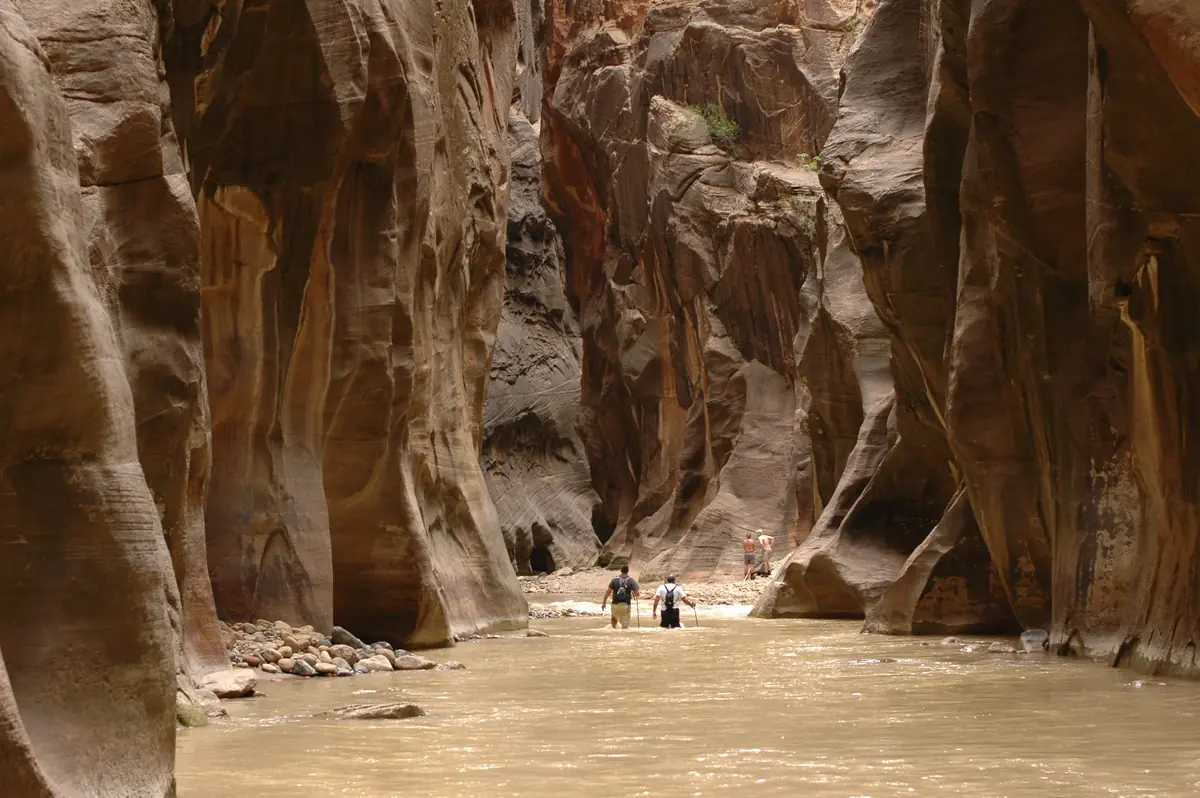
Angels Landing past Scout Lookout needs a permit. You can hike the West Rim from the Grotto to Scout Lookout without that permit. NPS calls that climb strenuous. It is not the short item in this day. The Narrows, bottom-up as far as Big Spring, needs no permit. The park closes it above 150 cubic feet per second and during a flash-flood warning, and for at least two hours after a warning is lifted. We are not saying it is open today. If the river is closed, the paved Riverside Walk is the hike, not a consolation prize you skip. Sunset without another canyon ride: the Pa’rus Trail. NPS calls it a good place to watch the sunset. Clock time changes by month. Details are on by time.
.jpg)
Two days
Day one is a single bigger hike in the cool part of the day, with the shuttle cushion built in. Scout Lookout, if you are fit and you do not have an Angels Landing permit, or the Emerald Pools trails from Zion Lodge, if you want to stay lower. We are not stacking Angels Landing and a long Narrows wade. Each one can take the day, and only one of them is legal without a permit. Be back at a stop well before the last bus on the shuttle page.
Day two is the river only if current conditions say the bottom-up Narrows is open. A short wade can be enough. Big Spring is the far end of the no-permit hike, and NPS calls that version a strenuous all-day trip, on the order of ten miles round trip if you go that far. If the flow is too high or a warning is posted, stay on Riverside Walk and add the Pa’rus Trail from the visitor center. The east side, including Canyon Overlook, is a car hike with very limited parking, not a shuttle stop. Read shuttle or car before you drive it. We are not repeating that essay here.
Water and a dry-trail pack: day-pack loadout. Clothing for those dry trails: what to wear. River gear, only if you are actually wading: Narrows kit. Parking: where to leave the car.
Three days
Days one and two are the plan above. Day three goes beyond Zion Canyon:
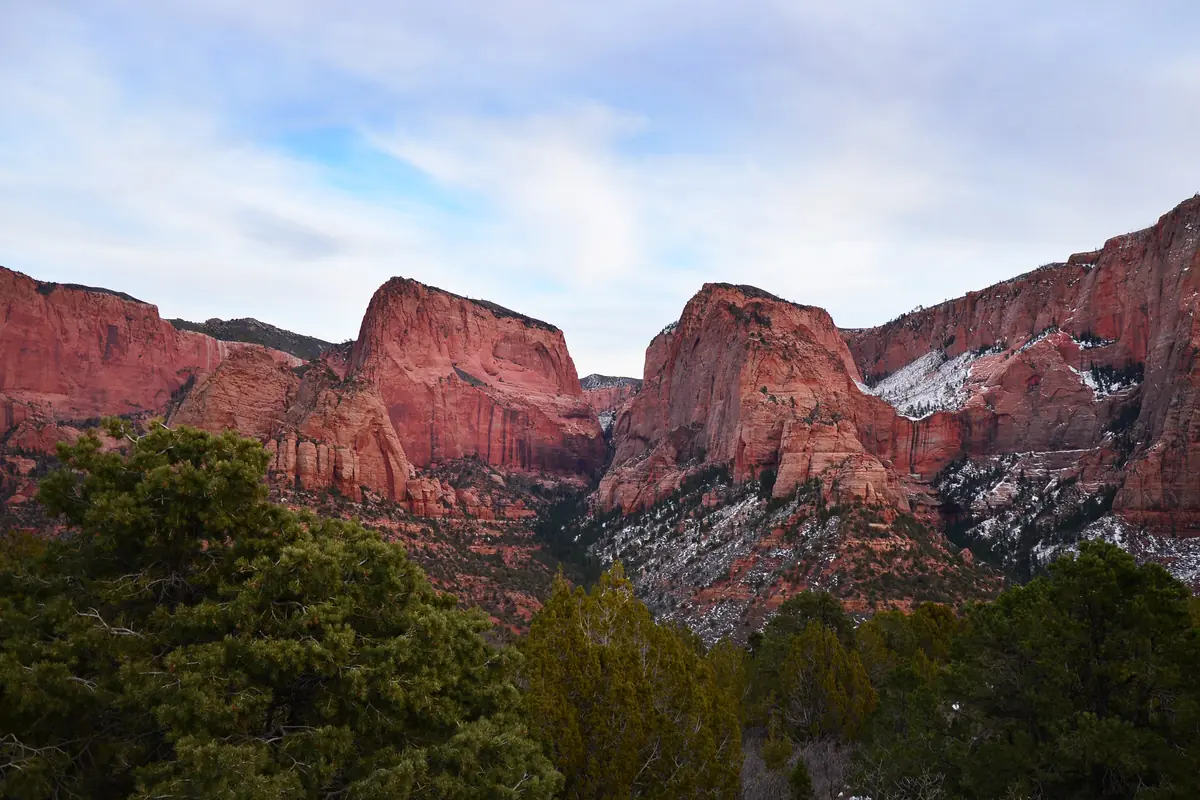
- Kolob Canyons: a separate entrance in the park’s northwest corner. The Kolob Canyons Scenic Drive ends at the Timber Creek Overlook. See the 3D view on maps.
- East side: drive the Zion–Mount Carmel Highway past Checkerboard Mesa. Canyon Overlook parking is very limited; read shuttle or car.
- Snow Canyon: a Utah state park near St. George with a different look (lava and white sandstone). Plan it on our sister site, snowcanyontours.com.
Family variant (little kids)
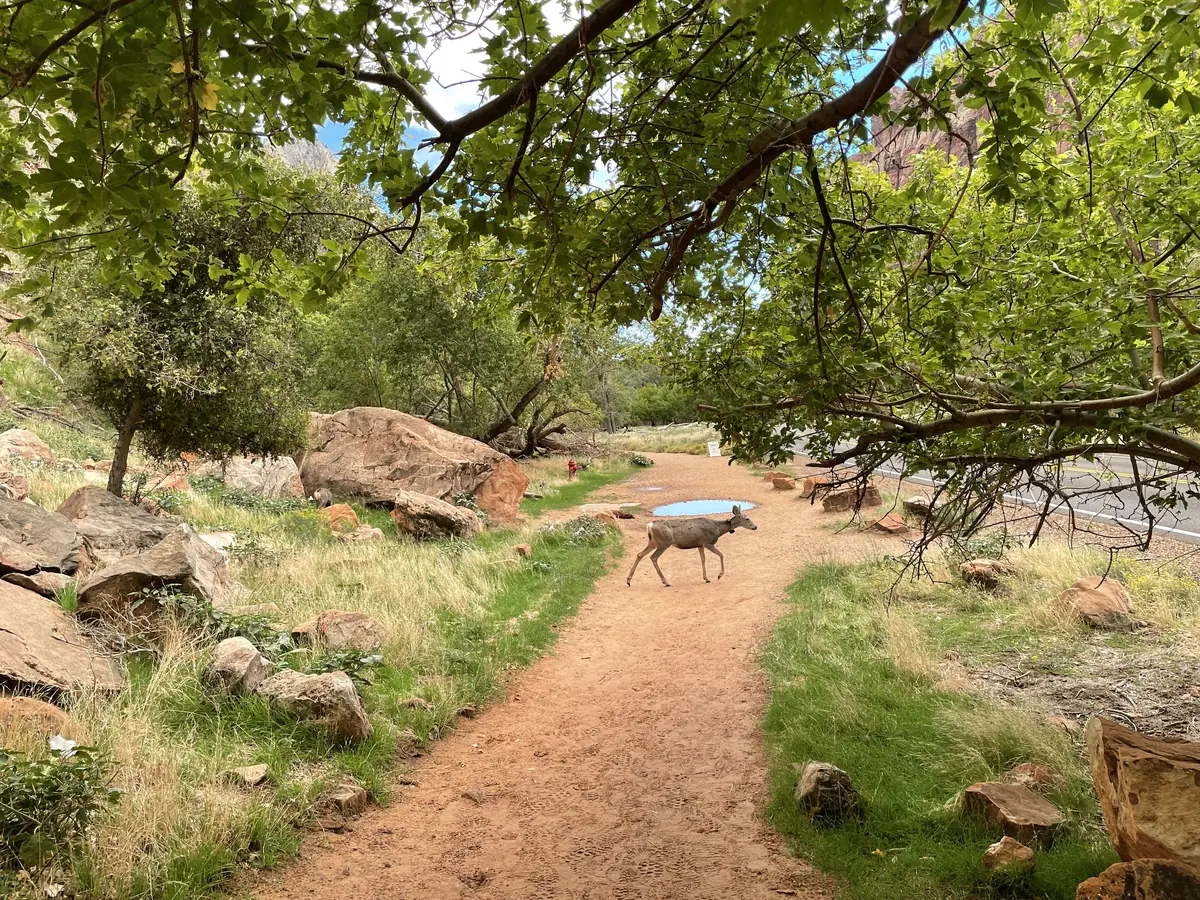
- Pa’rus Trail from the visitor center: paved, along the river, and the only trail where pets are allowed.
- Riverside Walk from the Temple of Sinawava and Lower Emerald Pools from Zion Lodge.
- Junior Ranger: see Junior Ranger. Guided horseback rides are offered by the park concessioner (see experiences).
More on toddlers. Pack the Family / Toddler kit.

Adventure variant
- Angels Landing with a permit (seasonal and day-before lotteries), or Scout Lookout without one.
- The Narrows bottom-up when the river is under 150 CFS and no flash-flood warning is posted. The top-down route needs a wilderness permit.
- Technical canyoneering: NPS requires a wilderness permit for every technical canyoneering trip.
Gear: Narrows kit, Canyoneering Intro kit. Permit details: Angels Landing permit.
A guided hike would be a partner trip, not ours, and it would not replace a permit. See tours for what to check before booking.