.jpg)
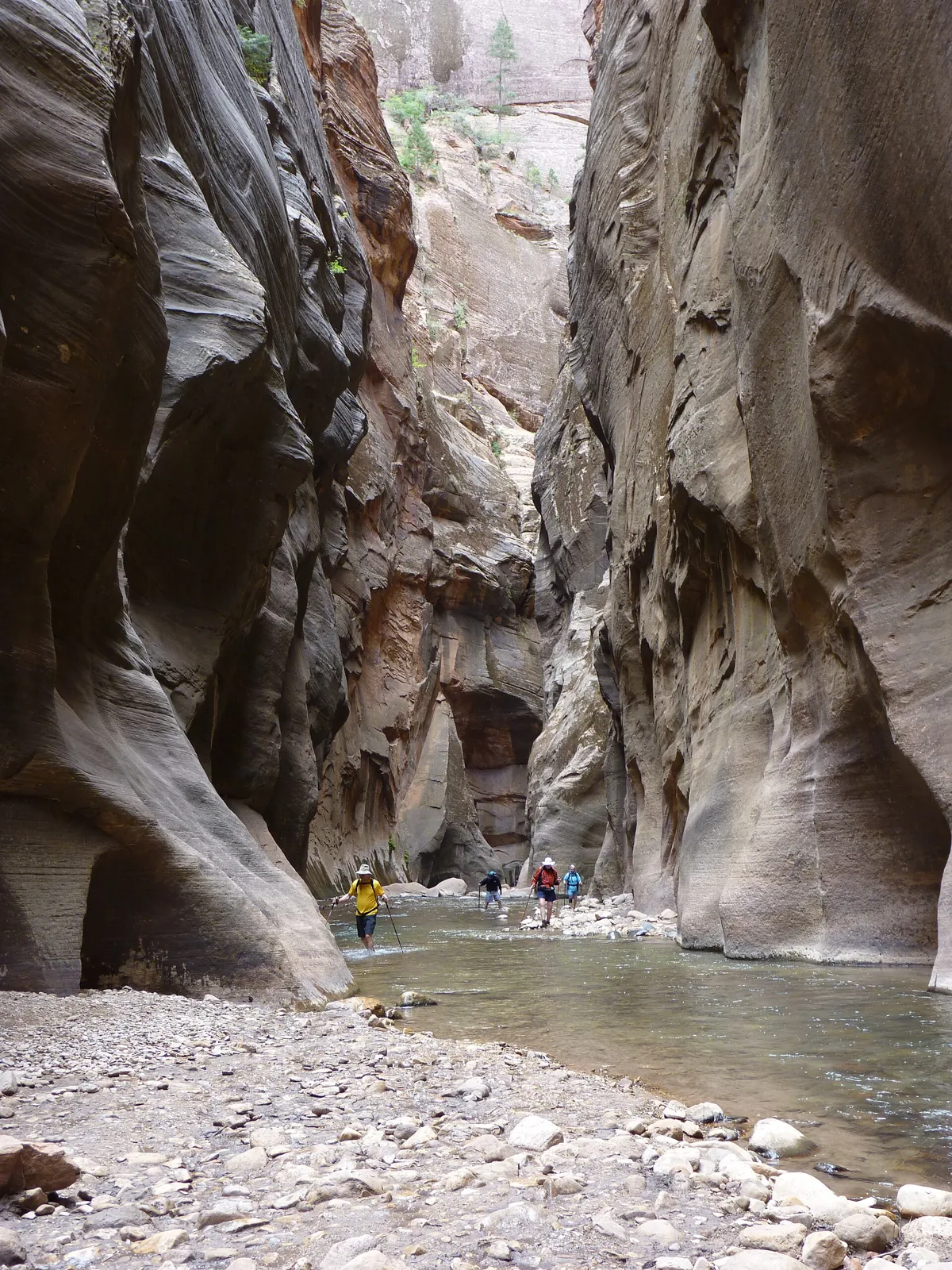
The Narrows is the Virgin River between tall walls, sometimes only a few dozen feet apart. You get there by walking the paved Riverside Walk about a mile from the Temple of Sinawava, shuttle stop 9, and then stepping into the water. A short wade can be enough. Walking upstream as far as Big Spring is allowed without a permit and can be a long, hard day, on the order of ten miles round trip if you go that far. The top-down trip from Chamberlain’s Ranch is a different hike, about 16 miles, and it needs a wilderness permit. Do not start at the top because a blog called it “the real Narrows.”
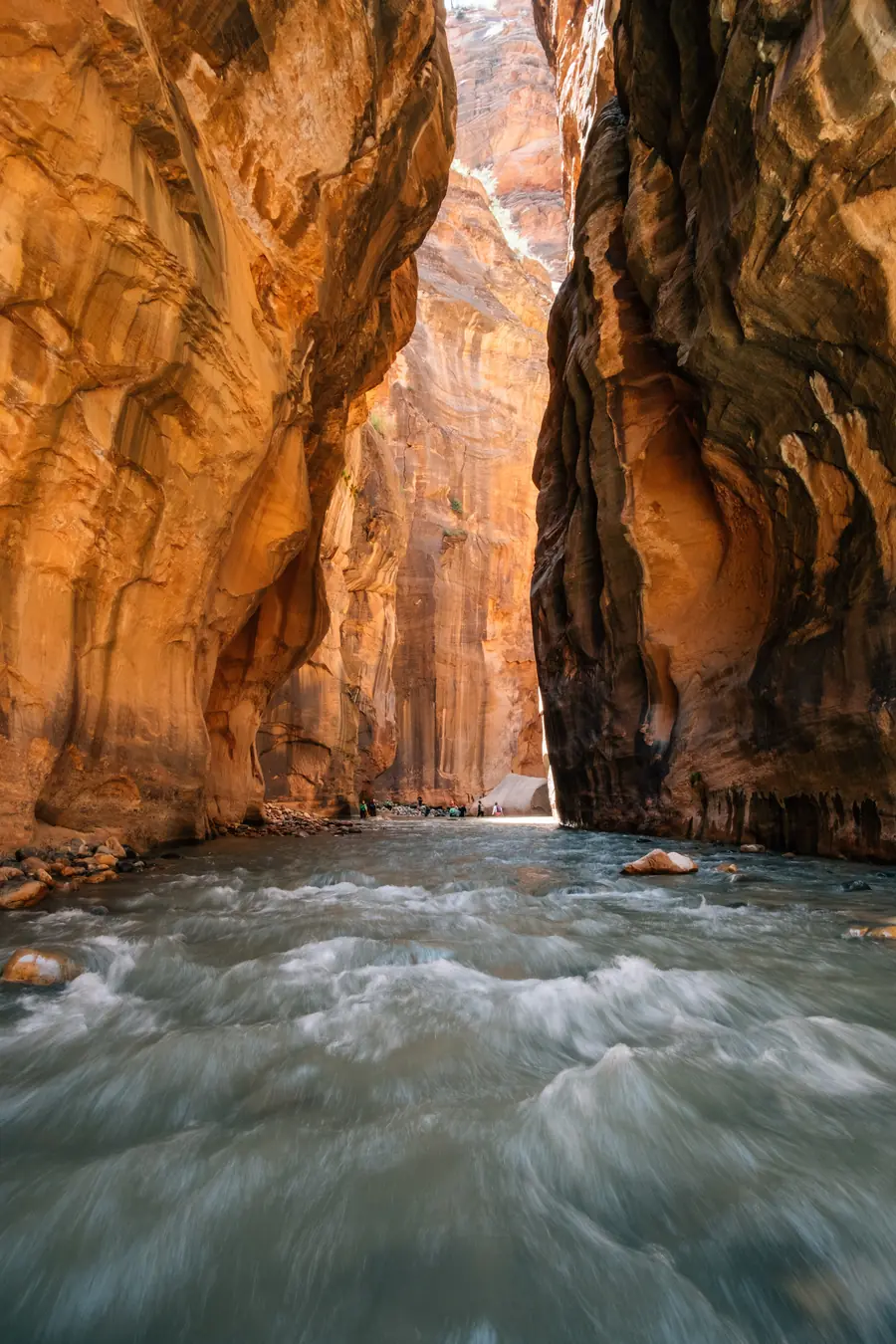
Do not go when the route is closed. NPS closes The Narrows when the river’s flow is over 150 cubic feet per second, and when the National Weather Service issues a flash-flood warning. After a warning is lifted, the closure holds for at least two more hours. Check the flow on the USGS gauge the park links, and check the forecast the morning you go. Spring snowmelt closes it in some years for weeks. The park’s own table of past closures shows years that stayed open and years that did not. Last year’s pattern is not this year’s water.
Do not walk past the boundaries set for people who started at the bottom. Upstream travel stops at Big Spring. Side trips into Orderville Canyon stop at a quarter mile from the junction. Above that junction, the maximum group size for upstream travel is 12 people. Do not climb the banks to get around a deep spot if you can stay in the watercourse. The park asks hikers to stay in the river so social trails do not scar the vegetation. That rule feels inconvenient exactly when the current is strongest, which is also when you should be turning around instead of scrambling the wall.
Do not wear sandals, Crocs, or go barefoot. The park compares the footing to wet bowling balls and says those choices often end in twisted ankles or crushed toes. Closed-toe shoes and a sturdy stick are the recommendation. Do not wear cotton and assume the desert heat will dry you. The narrow section stays colder than the rim. Quick-drying layers are the point. Do not drink the river or put your head under, because of cyanobacteria. Carry the gallon. Drinking water is at the Temple of Sinawava before you start, not miles upstream.
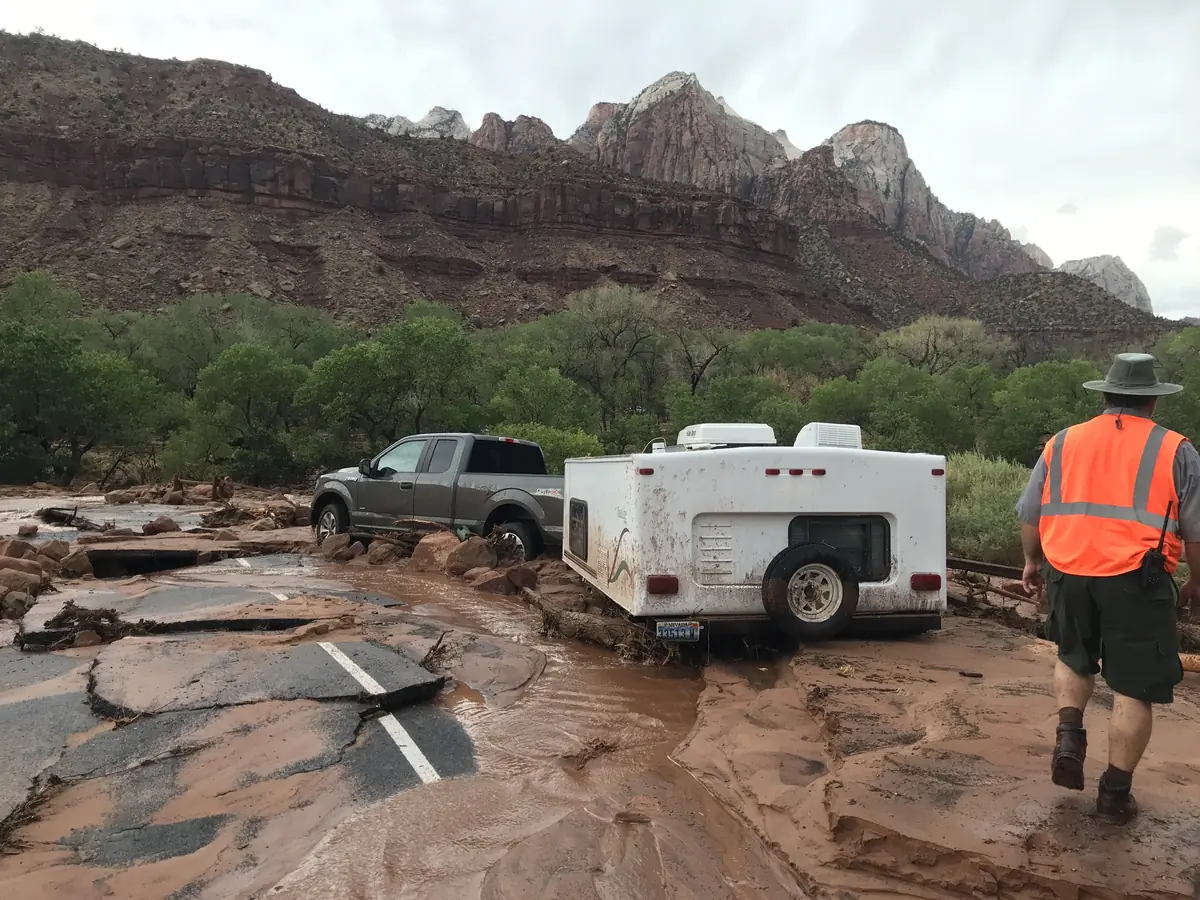
Do not ignore the river getting muddier or faster. The park’s own orientation says a change in clarity and a rising flow are warning signs, and that a storm can multiply the volume. Flash floods happen in slot canyons even when your trailhead looked sunny. Afternoon thunderstorms are more common in the summer monsoon months. If you are unsure, ask at a visitor center the same day and be willing to walk only the paved Riverside Walk. That paved mile is a good hike on a day the river is a bad idea. Rules and the flow chart: The Narrows, regulations, and safety.
.JPG)
.jpg)
Practical takeaway
Check the flow and the flash-flood warning the morning you go. If the river is closed, or rising, stay on the paved Riverside Walk. If it is open, wear closed-toe shoes, carry a gallon, and turn around at or before Big Spring.
Related on this site: Hiking and park tips, day-pack loadout, and a sample trip plan. More guides: guides index.
Quick FAQ
Do I need a permit for the bottom-up Narrows?
No. NPS says you do not need a permit to hike the Narrows upstream from the Temple of Sinawava.
When does The Narrows close?
When the Virgin River flow is over 150 cubic feet per second and when a Flash Flood Warning is issued.
Can I wear sandals?
NPS says closed-toe shoes are essential and sandals, Crocs, or bare feet are not appropriate.