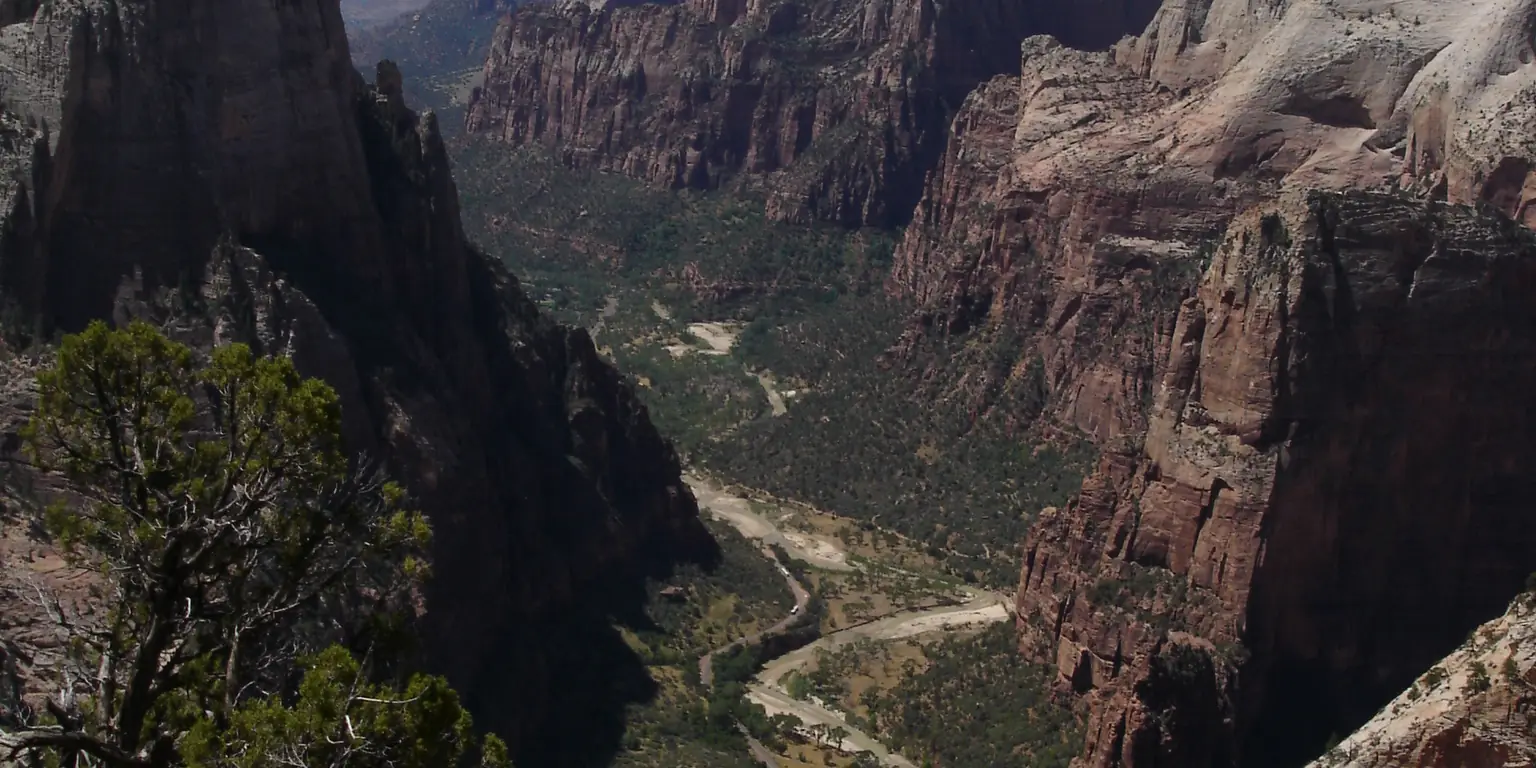

Zion National Park’s safety guidance tells every person to carry at least one gallon of water per day and to drink it. That figure shows up on the general safety page, on wilderness safety, and again for The Narrows. It is a floor for a day in the desert, not a medical prescription and not a promise that a gallon is enough for every body on a 100°F afternoon. The seasons page says summer temperatures regularly exceed 100°F. Hot, steep days need you to take the “at least” seriously and to start early. We are not inventing a second official number above one gallon. If you know you drink more, bring more.
Fill from potable taps before the trail. NPS lists drinking water at visitor centers, campgrounds, Zion Lodge, and some shuttle stops. Angels Landing hikers can fill at the Grotto and will not find drinkable water farther up that trail. Narrows hikers are told drinking water is available at the Temple of Sinawava as well as visitor centers and campgrounds. The spring info materials also say refill spots are marked on the park map. Look at the map in your hand, not at a memory of a fountain that might be off for repairs.
Do not drink the Virgin River or other in-stream water. Cyanobacteria that can produce toxins have been found in park waters, including the Virgin River. The park says no common filter removes those toxins to a safe drinking level, and it says not to submerge your head or drink in-stream water. Springs are an emergency source, not the plan. If you ever use one, treat the water the way the wilderness page describes, and still prefer the tap you filled at the start. A day hike should not depend on finding a spring.
The shape of the day changes the bottle count even when the official sentence stays “one gallon.” A paved Riverside Walk, about 2.2 miles round trip on the park’s spring info guide, is not the same sweat as Angels Landing’s roughly four-hour climb. Carry the gallon anyway in warm months, because the canyon floor is exposed and the walk back to the bus is part of the day. In The Narrows the water around your legs is cold even when the rim is hot. You still drink from the bottle you carried, not from the river, and you still want a layer that is not soaked cotton. Hypothermia is a Narrows problem. Heat illness is a rim problem. The same park can hand you both.
Salty snacks are reasonable when you are sweating. They are not medicine, and they are not a substitute for water. If someone is confused, stops sweating in the heat, or cannot keep fluids down, get help rather than pushing to the next viewpoint. The day-pack loadout is where specific bottles and a sun layer are listed. Read NPS safety and water sources the week you go.
.jpg)
Practical takeaway
Start a warm-season day hike with at least one gallon per person from a tap, and do not plan to drink the river. Fill again at the Grotto or the Temple of Sinawava if your hike starts there.
Related on this site: Hiking and park tips, day-pack loadout, and a sample trip plan. More guides: guides index.
Quick FAQ
How much water does NPS recommend?
At least one gallon per person per day.
Where can I refill?
NPS lists visitor centers, campgrounds, Zion Lodge, and some shuttle stops.
Can I drink from the river?
No. NPS says do not drink untreated water and do not drink or submerge your head in instream water because of toxic cyanobacteria.